
What Is Soil?
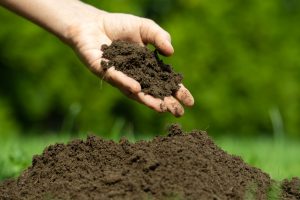
Soil is a vital natural resource that forms the foundation of life on Earth. It is the uppermost layer of the Earth’s crust, composed of minerals, organic matter, water, and air.
This complex and dynamic medium supports plant growth, regulates water flow, and provides habitat for countless organisms.
Composition of Soil
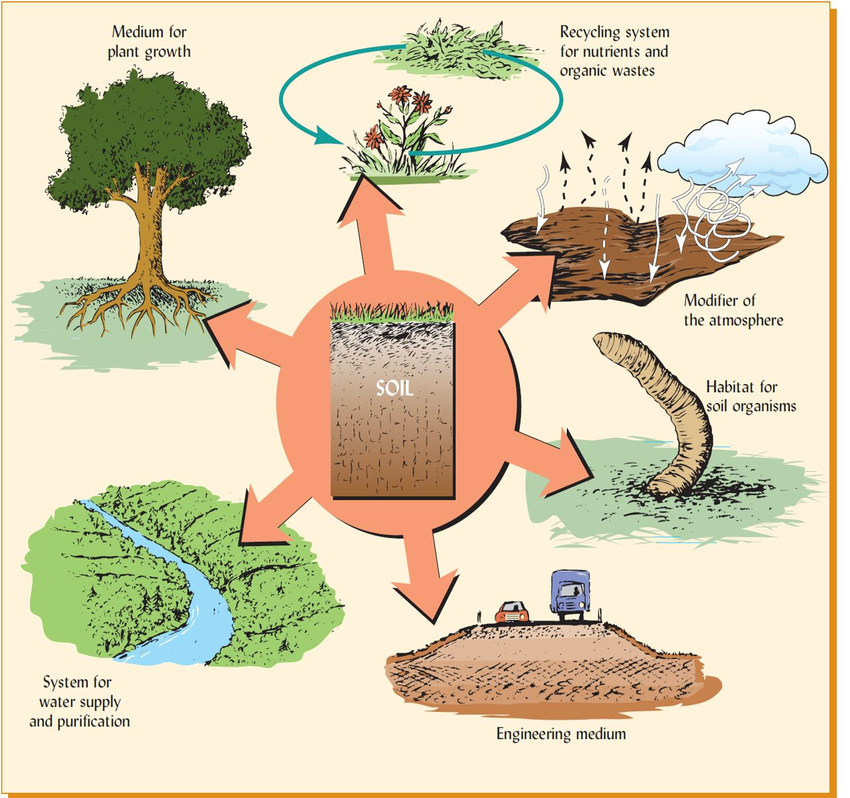
Soil is a complex and dynamic mixture of both organic and inorganic materials, which interact to create a fertile and life-supporting environment. Soil composition determines its fertility, structure, and ability to sustain plant life. Understanding these components helps in soil conservation, agricultural productivity, and environmental sustainability. The primary components of soil include:
1. Minerals (45%)
Minerals form the largest component of soil and originate from the weathering of rocks. These minerals provide essential nutrients for plant growth and come in different particle sizes, influencing soil texture. The three main mineral components are:
- Sand – Large particles that improve drainage but hold fewer nutrients.
- Silt – Medium-sized particles that help retain moisture and nutrients.
- Clay – Small, compact particles that retain water but can lead to poor aeration if too abundant.
2. Organic Matter (5%)
Organic matter is composed of decomposed plant and animal materials. It plays a crucial role in soil fertility and structure by:
- Enhancing nutrient availability through decomposition.
- Improving soil structure and aeration.
- Retaining moisture and supporting microbial life.
Humus, the fully decomposed organic matter, is particularly valuable in soil as it stabilizes nutrients and provides long-term fertility.
3. Water (25%)
Water is vital for soil as it dissolves nutrients and makes them available to plant roots. Soil water exists in different forms:
- Gravitational Water – Drains quickly and is not available to plants.
- Capillary Water – Retained between soil particles and accessible to plants.
- Hygroscopic Water – Forms a thin layer around soil particles and is unavailable to plants.
The balance of water in soil affects plant growth, microbial activity, and overall soil health.
4. Air (25%)
Soil contains air pockets that provide oxygen to plant roots and soil organisms. The presence of gases like oxygen (O₂) and carbon dioxide (CO₂) is essential for biological activity, including root respiration and microbial decomposition. Well-aerated soil supports beneficial microorganisms and prevents root suffocation.
Other Essential Components
In addition to these four primary elements, soil may contain:
- Microorganisms – Bacteria, fungi, and protozoa that help in organic matter decomposition and nutrient cycling.
- Chemical Nutrients – Essential elements like nitrogen (N), phosphorus (P), potassium (K), calcium (Ca), and magnesium (Mg), crucial for plant growth.
Formation of Soil
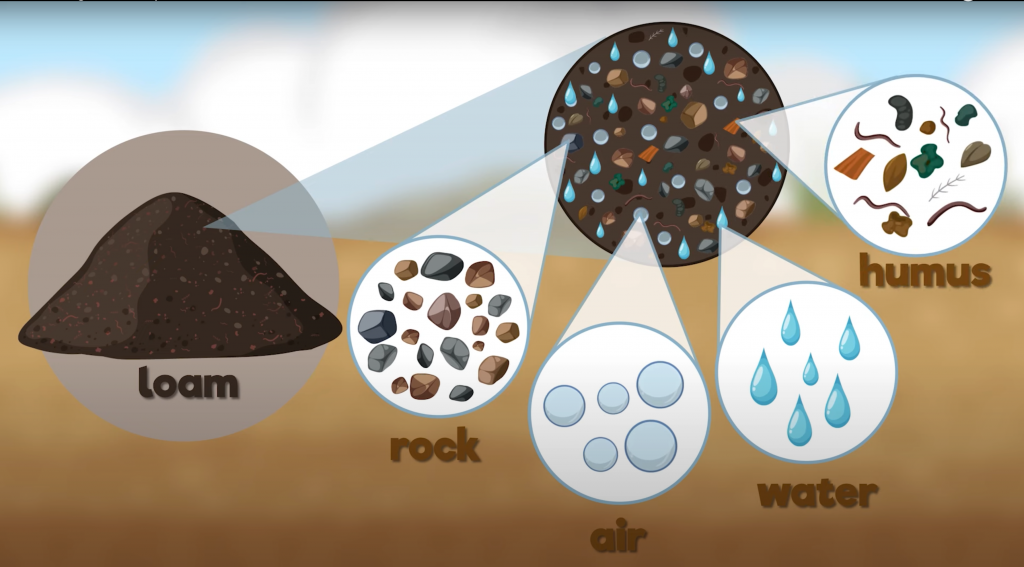
Soil formation is a long and dynamic process that occurs over thousands to millions of years. It results from the breakdown of rocks and organic materials through physical, chemical, and biological processes. Several key factors influence soil development, shaping its texture, composition, and fertility. Soil formation is a complex and continuous process influenced by multiple natural factors. Understanding these processes helps in soil conservation, sustainable agriculture, and land management, ensuring long-term soil health and productivity.
Factors Influencing Soil Formation
1. Parent Material
The parent material is the original rock or mineral deposit from which soil develops. This material determines the soil’s mineral composition and texture. Parent material can be:
- Igneous rocks (e.g., granite, basalt) – Formed from cooled magma and produce mineral-rich soils.
- Sedimentary rocks (e.g., limestone, sandstone) – Deposited by water or wind, leading to varied soil types.
- Metamorphic rocks (e.g., marble, schist) – Formed under heat and pressure, altering soil properties.
Different types of parent material result in soils with distinct characteristics and nutrient availability.
2. Climate
Climate plays a crucial role in soil formation by affecting weathering rates and organic matter decomposition. Two major climatic factors are:
- Temperature – Influences chemical reactions and biological activity. Warmer climates speed up organic decomposition, while colder climates slow it down.
- Precipitation – Determines water availability, affecting mineral dissolution and leaching. Excess rainfall can lead to nutrient loss, while arid conditions limit soil development.
3. Organisms (Biological Activity)
Living organisms, including plants, animals, and microorganisms, contribute to soil development in various ways:
- Plants – Their roots break down rocks and contribute organic matter through decayed leaves and stems.
- Microorganisms – Bacteria, fungi, and protozoa help decompose organic material and recycle nutrients.
- Animals (Earthworms, Insects, and Burrowing Creatures) – Mix soil layers, enhance aeration, and contribute organic matter.
Soil rich in biological activity tends to be more fertile and supports better plant growth.
4. Topography (Relief & Landscape Position)
The shape and slope of the land impact soil formation by affecting drainage, erosion, and exposure to environmental conditions:
- Steep slopes – Experience more erosion, leading to thinner, less developed soils.
- Flat or low-lying areas – Accumulate materials and water, forming deeper, more fertile soils.
- South-facing slopes (in the Northern Hemisphere) – Receive more sunlight, leading to drier soils compared to north-facing slopes.
5. Time
Soil formation is a slow process, requiring thousands to millions of years to develop into mature layers. Over time, weathering, organic matter accumulation, and biological activity lead to well-structured soil profiles with distinct horizons.
Stages of Soil Formation
- Weathering of Parent Material
- Rocks break down through physical (temperature changes, wind, water), chemical (oxidation, hydrolysis), and biological (root penetration, microbial activity) processes.
- Addition of Organic Matter
- Decomposed plant and animal materials mix with weathered rock particles, enriching the soil with nutrients.
- Soil Horizon Development
- Distinct layers (horizons) form over time, creating a structured soil profile.
- Leaching and Nutrient Cycling
- Water movement through soil layers redistributes minerals, affecting soil fertility and composition.
Types of Soil
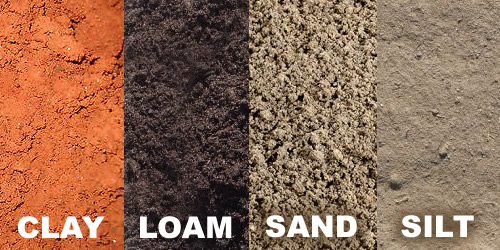
Soils are classified based on their texture and composition. The main soil types include:
Sandy Soil – Contains large particles, drains quickly but retains fewer nutrients.
Clay Soil – Composed of tiny particles, retains water well but may become compacted.
Silty Soil – Finer than sand, retains moisture but has better drainage than clay.
Loamy Soil – A balanced mixture of sand, silt, and clay, making it ideal for agriculture.
Importance of Soil
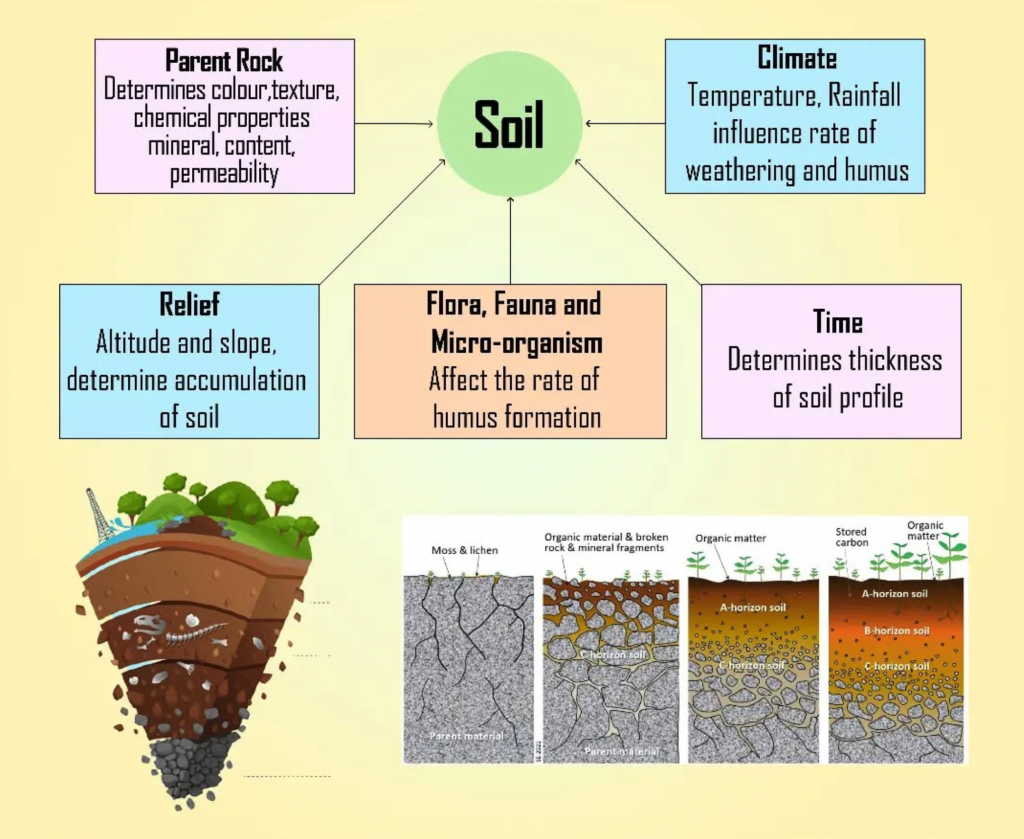
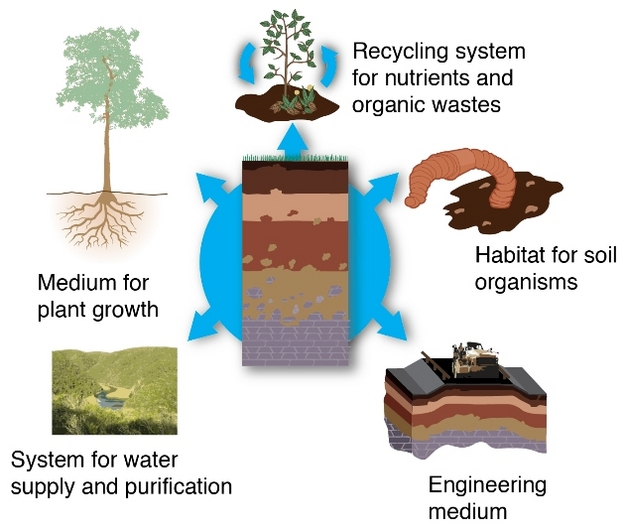
Soil plays a crucial role in sustaining life by:
Supporting agriculture and food production.
Filtering and purifying water.
Storing carbon and mitigating climate change.
Providing habitat for diverse organisms.
Serving as a foundation for human structures.
Soil Conservation
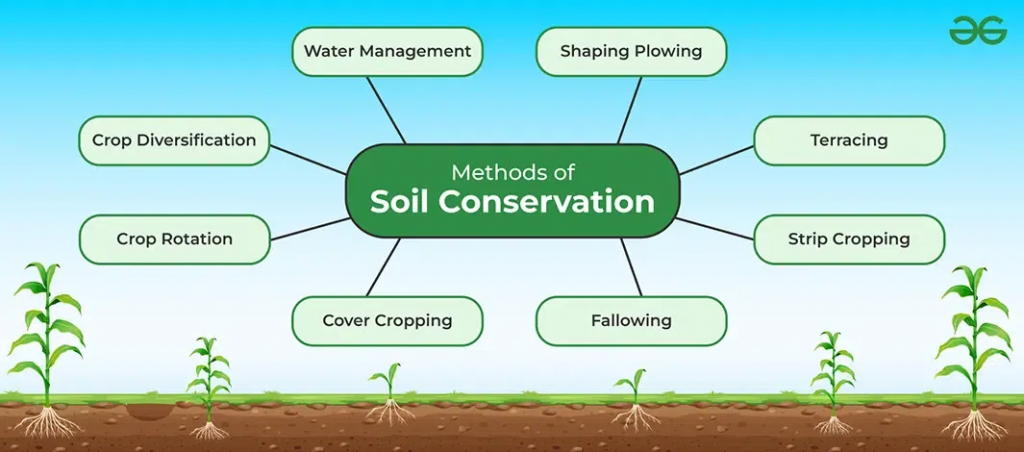
Human activities such as deforestation, overgrazing, and industrial pollution threaten soil health. Sustainable practices like crop rotation, afforestation, and minimal tillage help prevent soil degradation and maintain its fertility.
Soil conservation is essential for sustaining agricultural productivity, preventing land degradation, and preserving ecosystems. By adopting sustainable farming practices and land management strategies, we can protect this invaluable resource for future generations.
Why Is Soil Conservation Important?
- Prevents Soil Erosion – Protects topsoil from being washed or blown away, preserving essential nutrients.
- Enhances Soil Fertility – Maintains organic matter and nutrient levels for healthy plant growth.
- Improves Water Retention – Reduces runoff and promotes groundwater recharge.
- Supports Biodiversity – Sustains microorganisms and other life forms in the soil ecosystem.
- Mitigates Climate Change – Enhances carbon sequestration, reducing atmospheric CO₂ levels.
Major Causes of Soil Degradation
- Water Erosion – Rainfall and runoff wash away topsoil, leading to loss of nutrients.
- Wind Erosion – Strong winds remove loose soil, especially in dry and arid regions.
- Deforestation – Removing trees exposes soil to erosion and reduces organic matter input.
- Overgrazing – Excessive grazing depletes vegetation cover, making soil vulnerable to erosion.
- Excessive Tillage – Frequent plowing disturbs soil structure, leading to compaction and erosion.
- Chemical Pollution – Overuse of fertilizers, pesticides, and industrial waste degrades soil health.
Soil Conservation Methods
1. Contour Farming
- Practiced on sloped land, plowing along the natural contours reduces water runoff and soil erosion.
2. Terrace Farming
- Steps or terraces are built on hilly terrain to slow water flow and prevent erosion.
3. Crop Rotation
- Alternating crops in different seasons helps maintain soil nutrients, preventing depletion.
4. Cover Cropping
- Planting cover crops (e.g., legumes, grasses) between main crops prevents soil erosion and improves organic content.
5. Mulching
- Covering soil with organic or inorganic material conserves moisture, suppresses weeds, and prevents erosion.
6. No-Till Farming
- Avoiding plowing reduces soil disturbance, improves moisture retention, and prevents erosion.
7. Agroforestry
- Integrating trees with crops enhances soil fertility, reduces erosion, and supports biodiversity.
8. Windbreaks (Shelterbelts)
- Rows of trees or shrubs planted to reduce wind erosion and protect crops.
9. Strip Cropping
- Growing different crops in alternating strips minimizes soil erosion and maintains soil health.
10. Proper Irrigation Practices
- Efficient water management prevents waterlogging and salinization, preserving soil structure.
Conclusion
Soil is one of Earth’s most essential natural resources, serving as the foundation for plant growth, water filtration, and ecosystem sustainability. It is a dynamic and living system that supports agriculture, biodiversity, and climate regulation. However, soil degradation due to erosion, pollution, and unsustainable land use threatens its ability to sustain life.
Understanding the composition, formation, and conservation of soil is crucial for maintaining its fertility and health. Sustainable practices such as crop rotation, cover cropping, minimal tillage, and afforestation help protect soil from degradation and ensure its long-term productivity. Governments, farmers, and individuals all play a role in soil conservation by adopting responsible land management practices.
Protecting and nurturing soil today ensures food security, environmental stability, and a healthier planet for future generations. By prioritizing soil conservation, we preserve not only the land beneath our feet but also the ecosystems and human communities that depend on it.
 Sustainable Farming 101: What Is It? Benefits & Challenges?
Leave a Reply
You must be logged in to post a comment.